
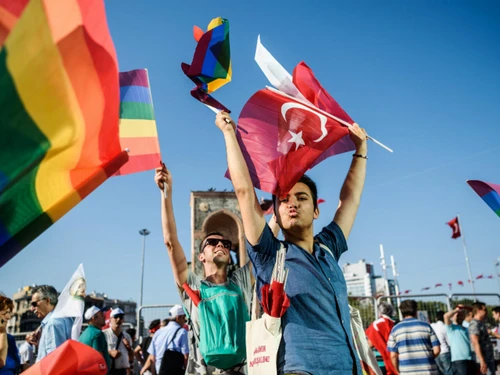
TURCHIA: LA REPRESSIONE DEL GOVERNO “HA FATTO A PEZZI LE FAMIGLIE LGBTQIA+”. L’INTERVISTA CON YILDIZ TAR
Radio Onda d`Urto - Tuesday, September 29, 2026
Nella notte tra l’11 e il 12 settembre 2013, in Turchia è scattata una vasta operazione di polizia denominata “La mia famiglia è al sicuro”.
Questo giro di vite a livello nazionale, attuato dal governo in nome della famiglia tradizionale e dell’ordine sociale, ha gettato le basi per la persecuzione sistematica della comunità LGBTQIA+ e delle organizzazioni per i diritti umani attive nel Paese.
L’operazione ha comportato perquisizioni a tappeto in 15 province del Paese, il blocco di siti web e profili sui social media, nonché l’arresto o la detenzione di decine di attivisti. Nel mirino sono finiti anche i sostenitori del movimento o anche semplici giornalisti che si sono occupati del tema.
Il governo ha preso di mira associazioni, organizzazioni non governative e collettivi, oltre ad attività commerciali e abitazioni private.
La scorsa settimana su Radio Onda D’urto abbiamo tracciato il quadro generale della situazione insieme al nostro collaboratore, il giornalista Murat Cinar.
Torniamo sull’argomento con un’intervista a Yildiz Tar, attivista di Kaos GL, la prima organizzazione nata in Turchia nel 1994 per tutelare i diritti LGBTQIA+. Ascolta o scarica
The original English-language version of the interview with Yildiz Tar from Kaos GL, the first organization in Turkey to address LGBTQIA+ rights, active since 1994 (text below). Listen or download
La trascrizione dell’intervista in lingua italiana.
Grazie Yildiz per esserti unito a noi e per condividere la vostra importante testimonianza su ciò che sta accadendo in Turchia in questi giorni. Per cominciare però, facciamo un passo indietro. Aiutateci a capire da quanto tempo, come e per quali ragioni si è sviluppato un clima così ostile alle diversità.
Forse possiamo iniziare proprio dalla fondazione della Repubblica di Turchia: nel corso della storia della Repubblica, l’omosessualità e la transessualità non sono mai state criminalizzate. Non c’è mai stata una legge specifica che prendesse di mira le persone LGBTQIA+. Naturalmente, esisteva la violenza, l’omofobia, la transfobia, i divieti, eccetera…
Tuttavia, prima del 2015 non si trattava di violenza sistemica, né di azioni coordinate direttamente dallo Stato. In quell’anno però, il 2015, con l’attacco della polizia al corteo del Pride di Istambul, è cambiato tutto.
In precedenza, il Pride di Istanbul era una manifestazione libera che vedeva sfilare centomila persone, le quali gridavano per i propri diritti e chiedevano uguaglianza e libertà. Poi però l’approccio del governo è cambiato drasticamente: hanno vietato il Pride. Prima un divieto temporaneo, poi a tempo indeterminato. E, giorno dopo giorno, abbiamo visto come il governo dell’AKP utilizzi strumenti, quali la censura, per opprimere le persone che loro considerano diverse. Inoltre, anche la Presidenza per gli Affari Religiosi è diventata un’istituzione che prende direttamente di mira le persone LGBTQIA+.
Uno dei punti di svolta inoltre, è stato la decisione della Turchia di ritirarsi dalla Convenzione di Istanbul. Il presidente Erdogan ha giustificato questa decisione sostenendo che la Convenzione di Istanbul normalizza l’omosessualità; un’affermazione, questa, a dir poco assurda.
Tutte queste scelte sono avvenute sulla base della retorica utilizzata dal governo, secondo la quale le persone LGBTQIA+ sarebbero agenti stranieri intenti a minare i valori turchi e il modello familiare turco-islamico e che cercano di trasformare la società turca in una società gay. La recente stretta repressiva è diventata l’evento culminante di questa retorica e di queste politiche.
Grazie Yildiz. Arriviamo quindi alle operazioni repressive della polizia avvenute nelle ultime settimane. Ci puoi fornire la tua ricostruzione di quanto accaduto?
Ok. Partiamo dalla data, che certamente aveva un forte valore simbolico. L’operazione di polizia è iniziata nel giorno dell’anniversario del colpo di stato del generale Evren avvenuto nella notte tra l’11 e il 12 settembre 1980. Anche durante quel golpe militare ci furono pressioni sulla nostra comunità. Alcune persone furono torturate nelle prigioni ed esiliate dalle città. E il governo ha scelto proprio quella data… 46 anni dopo. E, in tutto il Paese, molte associazioni e attivisti hanno subito l’irruzione della polizia nelle loro sedi. Gli uffici delle associazioni sono stati oggetto di perquisizioni e sono stati effettuati blitz anche in alcuni bar e locali commerciali di Istanbul.
Dal 12 settembre, persone e organizzazioni LGBTQIA+ in Turchia sono state oggetto di un’ondata coordinata di detenzioni, arresti, restrizioni sui social e crescenti attacchi pubblici, nell’ambito di un’operazione denominata dalle autorità “La mia famiglia è salva”. Questa stretta repressiva rappresenta la prima criminalizzazione di massa di attivisti e associazioni LGBTQIA+, nell’ambito dell’agenda governativa anti-LGBTQIA+. E sappiamo che altre operazioni arriveranno a breve…
Almeno 117 persone sono state trattenute in relazione alle operazioni, tra cui 40 attivisti. Almeno 83 persone sono state arrestate e sono in carcere in attesa del processo. Tra questi, almeno 25 sono attivisti o persone legate ad associazioni LGBTQIA+, tra cui fondatori e membri di associazioni. Le loro abitazioni sono state perquisite e le loro apparecchiature digitali sono state sequestrate. Sono stati arrestati con l’accusa di violazione della legge sulle associazioni e di oscenità.
L’incitamento all’odio e le campagne diffamatorie orchestrate da funzionari governativi – in particolare dal Ministero della Giustizia di Akan Gurelak – e dai media filo-governativi, mettono seriamente a rischio l’incolumità fisica delle persone detenute; tra le associazioni prese di mira figurano sette organizzazioni, tra cui la nostra e due realtà che operano a sostegno di persone che vivono con l’HIV.
Secondo le dichiarazioni rilasciate dalle procure filogovernative in merito ai procedimenti di scioglimento riguardanti alcune associazioni, non è ancora stato confermato se i pubblici ministeri abbiano effettivamente depositato la richiesta di scioglimento. Un altro aspetto è che, il 14 settembre, il Ministero della Giustizia ha emanato una circolare che amplia ulteriormente l’applicazione dei parametri relativi alla moralità pubblica, facendo esplicito riferimento ad attività che presumibilmente incoraggiano l’assenza di genere o la neutralizzazione del genere tra bambini e giovani.
Sullo sfondo di questi provvedimenti c’è evidentemente la progressiva erosione dello Stato di diritto e dell’indipendenza della magistratura nel Paese. Ciò suscita preoccupazioni riguardo al fatto che le attività incentrate sui diritti, in particolare quelle relative alla parità di genere e ai diritti LGBTQIA+, possano subire una sempre maggiore pressione giudiziaria e a nuove ondate di indagini.
Mi racconteresti in maniera più approfondita la repressione subita dalla vostra organizzazione ed eventualmente se anche tu o altre persone legate a Kaos GL, siete stati attenzionati da queste recenti operazioni di polizia?
Si. In questo momento sette persone della nostra organizzazione si trovano in galera. Quattro di loro sono membri del nostro consiglio di amministrazione. Tre di loro sono membri del nostro comitato di supervisione. E’ finita in carcere anche una giornalista che ha scritto articoli per la nostra rivista online. Uno di questi articoli parlava della famosissima serie TV americana “Agatha All Along”, in cui due attrici si baciano. Hanno detto che questa è una cosa oscena. E l’altro era un articolo sull’omofobia nello sport. Riportava semplicemente due uomini, due giocatori di football, che si baciavano.
E il terzo era, in realtà, un articolo scritto da Tuğba Tekerek, una giornalista indipendente che ha seguito le elezioni in Georgia e ha intervistato per noi l’associazione LGBTQIA+ locale; poi noi lo abbiamo pubblicato. Dunque, tutto ciò di cui sono accusati si riduce ad articoli di giornale; questo poiché “loro” considerano la stessa esistenza delle persone LGBT come qualcosa di osceno.
E, a parte questo, abbiamo osservato che l’uso delle leggi sull’oscenità contro le persone LGBTQIA+ è in crescita. Molte sex worker, come le donne trans ad esempio, sono state prese di mira sia in passato che in questa operazione. E, insomma, stanno cercando di interpretare la legge come se persino le parole, una bandiera arcobaleno, due uomini che si tengono per mano o una donna trans che condivide semplicemente una propria foto, rappresentino qualcosa di osceno.
L’aspetto tragicomico è che, per il reato di oscenità previsto dalla legge, anche se ti venisse inflitta la pena massima, finiresti per scontarla in un regime di semilibertà. Quindi non dovresti essere mandato in un carcere di massima sicurezza. Però in attesa del processo, i nostri amici sono stati messi in custodia cautelare in un carcere di massima sicurezza, per lo più in isolamento: sono stati sottoposti a perquisizioni corporali integrali. Vengono umiliati e minacciati. Per giorni non sono riusciti ad avere accesso ad acqua pulita o a vestiti. Dunque, le molestie in carcere continuano e vorrei semplicemente fare alcuni dei loro nomi e raccontare le loro storie.
Una di queste riguarda Nedime Erdoğan. Suo figlio è omosessuale e siede nel nostro consiglio direttivo; lei lo ha sempre sostenuto e per questo l’hanno arrestata e incarcerata. Hanno incarcerato una madre che si è limitata a sostenere il proprio figlio e a dire: “Mio figlio ha dei diritti”.
Un’altra storia riguarda Janset Kalan, attivista trans molto nota – conosciuta a livello internazionale – che ha persino parlato all’ONU due o tre mesi fa. Questo è interessante per i vostri ascoltatori, perché aveva ottenuto un master in Italia… e ora si trova in prigione.
Un altro caso è quello di un attivista trans molto importante, Umut Derin. Lui si è mobilitato in tutto il Paese per moltissimi anni e che ora si trova in carcere. Dunque, questa operazione, “La mia famiglia è al sicuro”, ha fatto a pezzi le famiglie delle persone LGBTQIA+. E ora, tutte le nostre famiglie e i nostri amici in tutto il Paese sono davvero preoccupati per la sicurezza e il benessere dei loro cari.
La visione del governo turco rispecchia quella della maggioranza della società? E la loro propaganda sta funzionando?
Beh, in realtà no. Il governo sta effettivamente cercando di imporre alla società le proprie argomentazioni, idee morali e politiche, tentando di plasmarla a propria immagine. Ma due anni fa abbiamo condotto un sondaggio a livello nazionale.
Secondo i risultati il 39% degli intervistati ha dichiarato di sostenere la parità di diritti per le persone LGBTQIA+. Il 30% ha dichiarato di non avere alcuna opinione in merito, e solo il 30% si è detto contrario al riconoscimento di pari diritti alle persone LGBTQIA+. Quindi il nostro problema non è un’omofobia sociale profondamente radicata. Ovviamente nella società l’omofobia esiste, ma non è il problema principale della gente.
Il problema principale, ora, è che abbiamo un governo che ha dichiarato guerra alle persone LGBTQIA+ e cerca di inquadrare la situazione in un’ottica anti-LGBTQI: è questo il nostro problema, la violenza politica.
Yildiz secondo te in che modo la repressione della comunità LGBTQEA+ mette a rischio anche i diritti di altre minoranze?
Credo che tutto parta da lì, parte sempre dalle persone LGBTQIA+. È come se fossimo il laboratorio nel quale il governo sperimenta il proprio comportamento autocratico, legittimando così il ricorso alla violenza politica per poi esportarla nelle altre comunità. Tutto è iniziato nel 2015 con il divieto delle marce del Pride; poi hanno vietato qualsiasi tipo di manifestazione. Quindi, credo che in Turchia ci troviamo ad un punto di svolta. Inoltre, non si tratta di un problema che riguarda solo la Turchia: è una questione globale, poiché sappiamo che questi leader autocratici imparano gli uni dagli altri ed esportano idee, meccanismi e metodi di oppressione della società. Si tratta dunque di una minaccia per il pianeta, nonché per i concetti di democrazia e diritti umani.
E devo dire che l’Unione Europea ha mostrato quantomeno una certa ipocrisia; l’Unione Europea stessa infatti, è stata presa di mira in queste operazioni proprio perché finanzia le associazioni LGBTQIA+, come se ricevere finanziamenti fosse illegale. Perché in Turchia la maggior parte dei fondi pubblici va alle istituzioni e alle ONG di proprietà del governo.
Ma non è un reato quando sono loro a prendere i soldi, mentre lo diventa se sono le associazioni LGBTQIA+ a ricevere i finanziamenti. E nonostante l’Unione Europea ci abbia finanziato, poi, non abbiamo sentito nulla di significativo in nostra difesa. Un atteggiamento ipocrita che minaccia le stesse fondamenta dell’Unione, ovvero la democrazia, lo Stato di diritto e i diritti umani.
Siamo giunti alla fine di questa intervista, Yildız Tar, volevo chiederti se c’è qualche altro aspetto che ci tieni a sottolineare rispetto alla situazione.
Beh, intanto grazie mille per il vostro supporto; per noi è prezioso. Ci è di ispirazione aver visto più di 60 città in tutto il mondo e le loro manifestazioni di protesta; ci dà speranza sapere che altre persone queer nel mondo stanno scendendo in piazza per noi. Vorrei inoltre ringraziare personalmente tutti coloro che stanno facendo sentire la propria voce riguardo a questo giro di vite.
English version.
On the night of September 12–13, a massive police operation dubbed “My Family Is Safe” was launched in Turkey. This nationwide crackdown—carried out in the name of the “traditional family” and “social order”—laid the groundwork for the systematic persecution of the LGBTQIA+ community and human rights organizations active in the country.
The operation involved sweeping searches across 15 of the country’s provinces, the blocking of websites and social media profiles, and the arrest or detention of dozens of activists. Supporters of the movement were also targeted. The government targeted associations, non-governmental organizations, and collectives, as well as commercial venues and private homes.
On Radio Onda d’Urto we already outlined the general picture last week with our collaborator, journalist, Murat Cinar. However, Let’s return to the topic with an interview with Yildiz Tar, part of the association Kaos GL, the first organisation that care about LGBTQIA+ rights in Turkey founded in 1994.
To begin, let’s step back a bit—beyond the Turkish state’s recent crackdowns on the LGBTQIA+ community. Help us to understand, Yildız Tar, how and for how long such a hostile climate toward diversity has developed, and for what reasons.
So maybe we can begin with actually, the, like, foundation of the Turkish Republic and throughout the Turkish Republic’s history, homosexuality and transsexuality were never been decriminalized. So, there was never a direct law targeting LGBTQI, people. But, of course, there were, state violence, a lot of homophobia, transphobia, bans, etcetera. But, before 2015, it wasn’t, this kind of systematic violence, and it wasn’t coordinated actually directly by the State.
But in 2015, it all started with a police attack on the Istanbul Pride march. Before that, Istanbul Pride march was a free march that a 100,000 people were marching and, shouting for their rights, asking for equality and freedom. But in 2015, the government’s approach drastically, and, it started with bans on pride marches, then the bans continued, especially in Ankara, the capital, and turned into a indefinite, ban, during the state of emergency. And, day by day, we have seen that, the AKP government uses, like, tools, to oppress LGBTQI people, with, censorship. And, also, the presidency of religious affairs became another institution that is directly targeting LGBTQI people.
One of the turning points was, Turkey’s decision to annul Istanbul convention. And, they they justified fight this decision by, direct the president Erdogan justified this decision by saying that, Istanbul convention normalizes homosexuality, which is which is a, like, absurd sentence. But we have seen that government is using some kind of rhetoric that LGBTQI people are some foreign agents who are trying to undermine Turkish values and Turkish, Islamic family and, trying to actually turn the society into gay. And the recent crackdown became the sedented, events, and the climax of this rhetoric and policies.
Let’s go back, to the last few weeks. Can you give us your account of what happened during the police operations?
Actually, it was the date was also a symbol symbolic date. It all began in the forty sixth anniversary of military coup here in Turkey. It started in September 12. And during the military coup, there was also pressure towards Lgbtqi people. They were tortured in the prisons and, exiled from the cities, and the government chose the exact date forty six years later. And, around the country, a lot of LGBTQI activists and associations, were, like, houses were raided. The offices of the associations were raided, and, also, there were some raids in Istanbul to cafes and bar.
And since, September 12, LGBTQI people, organizations, and Turkey have faced a coordinated wave of detention, arrest, digital restrictions, and increasing public targeting as part of the operation dubbed my family is saved by authorities.
This crackdown represents the first mass criminalization of LGBTI plus people activists and associations as part of the government’s anti LGBTI agenda with new waves of operations expected immediately.
At least 117 people have been detained in connection with the operations, 40 former LGBTI rights defenders. At least 83 individuals have been arrested pending pretrial detention. They are now in prison. And, at least 25 of them are LGBTI activists and individuals connected to LGBTI associations, including founders and members of association bodies whose houses were raided and their digital equipment seized. They have been arrested under charges of violating the law on associations and also obscenity.
Even hate speech and smears by government officials, in particular the Ministry of Justice, Akın Gürlek and pro government media against LGBTI rights defenders and prison conditions the physical safety of our imprisoned France is at serious risk the targeted associations included seven LGBTI associations and also two organizations working with people living with HIV.
Press statements by the prosecutor’s offices and pro government New South Wales, dissolution cases with those against associations, we have yet to confirm whether prosecutors have submitted the solution request.
And another thing was the Ministry of Justice issued a circular on, September 14 that further expands the use of public morality frameworks by explicitly referring to activities allegedly encouraging genderlessness or gender, neutralization among children and young people against the backdrop of the gradual destruction of rule of law and judicial independence in the country.
This creates concerns that rights based activities related to gender equality and Lgbtqi rights may face increased judicial security and, further waves of investigations.
Have you, either as an organization or personally, been subjected to harassment as a result of these recent police operations? If so, what kind?
Yes. Now seven people from our organization is in jail. Four of them are our board members. Three of them are our supervisor committee members. And also a journalist is in jail, because she wrote an article to our online magazine. They were imprisoned because cast jail published, some articles including an article about a very famous American TV show, “Agatha all along”, and the two women actresses were kissing each other.
And they have they said that this is an obscene thing. And, the other was an article about, the homophobia in the sports, and, it was just, two men two football players were kissing each other.
And, third one was actually an article written by Tuğba Tekerek, an independent journalist who covered the elections in Georgia and interviewed the local LGBTQI association for us and we published. So, all the things they are accused of are, are news articles and, they have seen the the very existence of LGBTQI people as an obscene thing.
And, apart from this, we did, like, we have seen that the use of obscenity laws against LGBTQI people is an increasing, trend.
A lot of sex workers, like, trans woman were, targeted before and also in this operation too. And, like, they are trying to actually interpret the law as if, even the words LGBTI, a rainbow flag, man holding hands, a trans woman just sharing a picture of herself, an obscene thing. The tragicomic part of it that the obscenity crime in the law, if you you even get the maximum penalty, you you will be in a, like, one month in an open prison. You shouldn’t be sent, to, like, a closed prison.
But before the trial, now our friends are in pretrial detention in a closed prison, mostly in solitary confinement, and they have strip examinations. They have faced humiliation. They have been threatened. They couldn’t reach clean water or clothes for a while. So, the harassment continues in the prison, and, I I want to just give some of their names and their stories.
One of them is Nedime Erdoğan. She’s a mother of a gay son who is our board member, and they have actually detained and put in prison a mother who only supported her son and said that, my son, has rights. Another son said, Kalan, she’s actually a very, like, known well known, internationally well known, trans woman activist, who actually spoke in UN two or three months ago. It’s it’s maybe interesting for, your, listeners. She actually studied in Italy. She got her master’s degree in Italy, and, she is now in jail.
Another one is. He’s a very important trans man activist who organized across the country for many, many years, and now he’s also in jail. So, this operation, my family is safe, tore the families of LGBTQI people apart. And, now, all of the, like, families and friends, around the country, they are really, anxious about the safety and well-being of our loved ones.
Does the Turkish government’s vision reflect that of the majority of the society, and is their propaganda working?
Well, actually, no. I think and also I know from the, like, surveys that, the government is trying to actually impose its own political and, moral, arguments, moral ideas into the society and trying to shape the society in their own image. Because two years ago, we had a national survey.
We conducted a national survey as, and, 39 % of the society said that they support LGBTQI people having equal rights. 30 % said that they don’t have any idea, and only 30 % said that they’re against LGBTQI people having equal rights.
So the our problem here is not, a very deeply rooted societal homophobia. Of course, there is a homophobia around the society, but it’s not the major issue. Now the major issue is we have a government that declared a war against LGBTQI people and trying to shape hold it in an anti LGBTQI rhetoric, and that is our problem. Our problem is political violence.
In your opinion, how does the repression of the LGBTQIA+ community also put the rights of other minorities at risk?
Well, it’s just, it all starts with, it always starts with LGBTQI people. It’s, like, we are like the laboratory of the government’s, autocratic behavior and legitimize their usage of, like, political violence towards us. They export it to other communities. Like, back in, 2015, it started with the banning of the pride marches, then, they have banned any kind of, demonstrations.
So the I think in Turkey, we are in that turning point. And, also, it’s the case of not Turkey, but it’s a global issue because we know that, these autocratic leaders are learning from each other, and they’re exporting ideas, mechanisms, and base of oppressing to society. So it’s a threat for the, globe, and it’s also threat to the democracy and human rights notions. And I have to say that European Union has been, at the very least, very like, there there is hypocrisy amongst EU because, EU was also targeted in these operations as EU is funding these LGBTQI associations as if getting funding was illegal.
Because in Turkey, like, most of the funds are going to the public institutions and, like, governments, own NGOs. But, it’s not crime when they take the money, but it’s a crime if, LGBTQIA Associations get the funding. And we haven’t heard anything meaningful from the EU level.
And this is an hypocrisy, and this is also a danger to the very notion that EU says it represents the democracy, rule of law, and human rights.
Yildiz, would you like to add anything, at the end of this conversation, something that you think is important to underline?
Well, thanks a lot for your support, and it was really, helpful for us. And it gives us inspiration that we have seen more than 60 cities around the globe, their protest demonstrations, and, it gives us hope, that, other queer people around the globe are on the street for us. And, I would like to personally, thanks to everyone who are trying to raise their voice, on this crackdown.