
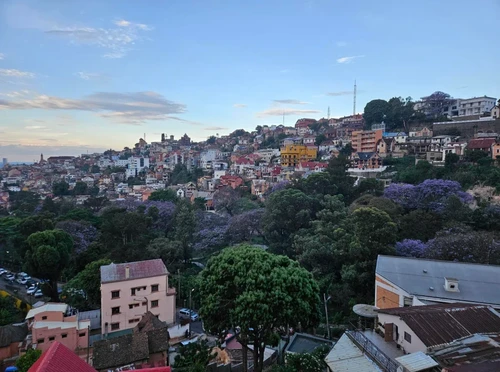
Back from Madagascar for “La nuit des idées”
DiPLab - Wednesday, November 25, 2026This post is a translation from Paola Tubaro, DiPLab’s co-founder, post on Data Big and Small. Read the original post in french here
Last week, I had the great pleasure of returning to Madagascar, where I was invited by the French Institute for their renowned event, “La Nuit des idées“.
Since 2017, Madagascar has been a really prolific research field for me and several other members of DiPLab. Indeed, several data annotation companies are located there.
It then seemed important to me to not only go there with our datas, and use them for international scientific publications without also making an effort to share those findings with the concerned actors in Madagascar.
Without pretending that we managed to reach all the concerned actors — a complex, long, and not always feasible process — it was important to at least take a first step in this direction.


On Tuesday 17 of november with Antonio Casilli, we hosted a debat following the projection of the documentary “Les sacrifiés de l’IA” (In the Belly of AI) at the French High School of Antananarivo. On Thursday 19, we participated to the World Philosophical Days at Antananarivo University


The most important event was “La Nuit des Idées” untitled this year “Open the way: IA, of memory and future“, on the 21st. I’ve participated to two round tables, respectively “IA and social networks: towards emancipation or digital lock-in” and “Digital technology and society: development, inequality and digital divide”


In all three cases, the exchanges were really fruitful. I didn’t limit myself to talking about my research or presenting my results, but I had the opportunity to learn a lot from colleagues, and public – especially students.
Ultimately, we ask ourselves very similar questions across continents – for example, about the need for a code of ethics, or the most apororiate way to adapt our teaching. The act of sharing research findings with those involved carries profound significance and embodies a sense of reciprocity that the commonly used term “science communication” fails to convey.